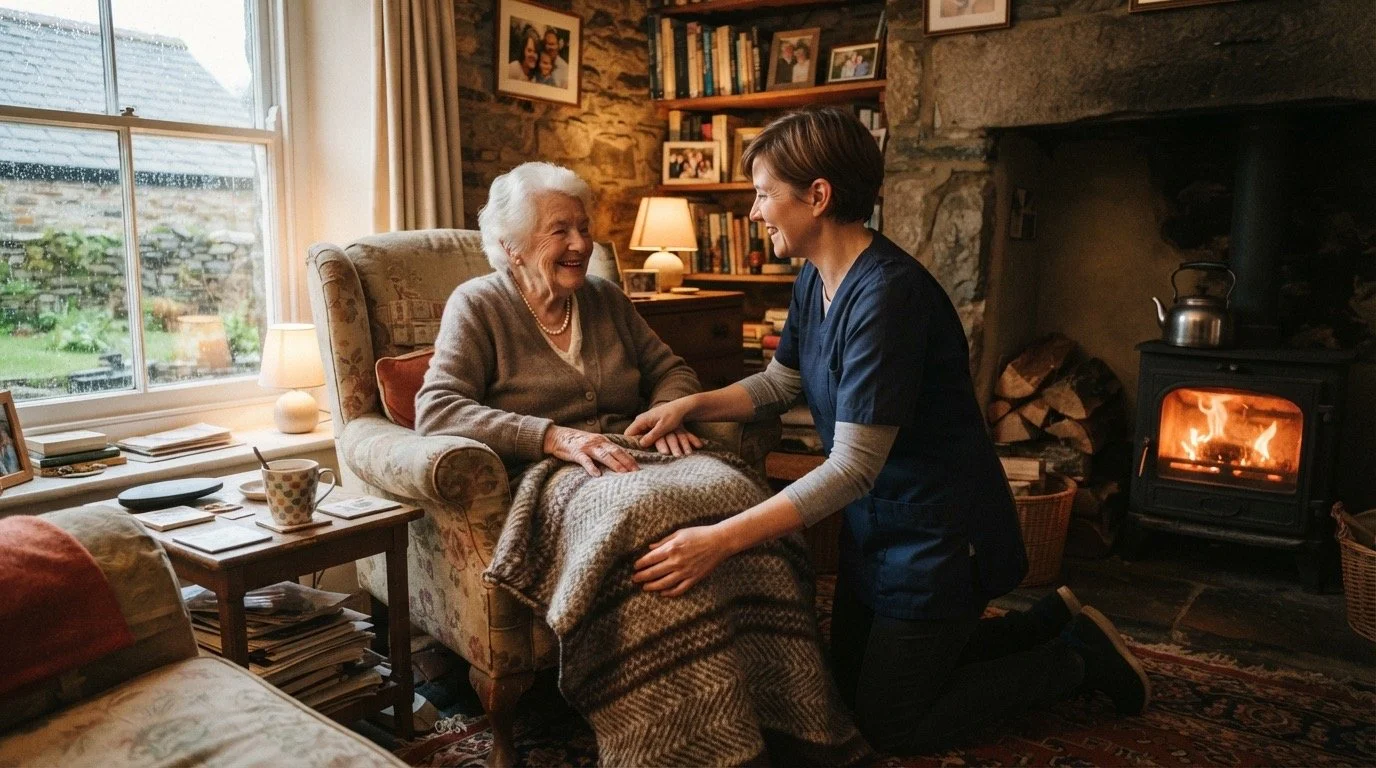
Cornish winters may be milder than in much of the country, but damp, wind and short days still take their toll, especially for older people living alone. A cold home raises the risk of chest infections, heart problems, strokes and falls. With energy bills set to rise again in January, it is more important than ever to know what help is available, and to keep warm rather than cut back.
What the January energy price rise means
Ofgem has announced that the energy price cap will rise by 26% from 1 January to 31 March 2027. For a typical household paying by Direct Debit, that takes annual gas and electricity costs from about £1,723 to about £2,166. The cap limits the price of each unit of energy and the daily standing charge, not your total bill, so homes that use more heating will pay more.
A few simple steps can help:
Take a meter reading on 31 December or 1 January and send it to your supplier, so you are not charged the higher price for energy used before the rise.
Check your Direct Debit is set at a sensible level, and speak to your supplier early if you are worried about falling behind. Suppliers must offer help, such as payment plans, to customers who are struggling.
Please don't switch the heating off to save money. Age UK and the NHS both warn that a cold home can be dangerous for older people. Get help with the cost instead.
Financial help with heating this winter
£100 Household Energy Payment: households in England in council tax bands A to D are due a one-off £100 from January 2027, paid through local councils. If you pay council tax by Direct Debit it should arrive automatically. If not, Cornwall Council should invite you to apply.
Winter Fuel Payment: £200, or £300 if you are 80 or over, is paid automatically to most people over State Pension age in November or December. If your income is over £35,000, it is taken back through the tax system.
Warm Home Discount: a £150 discount on your electricity bill, usually added automatically between now and March if you get Pension Credit or certain other benefits.
Cold Weather Payment: £25 for each 7-day spell of very cold weather between 1 November and 31 March, if you get Pension Credit or certain other benefits.
Pension Credit: this is the key that unlocks much of the help above, and many people who are entitled to it don't claim it. A claim can be backdated by up to 3 months. Check on GOV.UK or call the Pension Credit claim line on 0800 99 1234.
If you are not sure what your loved one is entitled to, the Age UK Advice Line on 0800 169 6565 (8am to 7pm, every day) can do a free benefits check. In Cornwall, Community Energy Plus gives free, independent energy advice on 0800 954 1956, and Cornwall Council's Winter Wellbeing pages list local grants and support.
Join the Priority Services Register
The Priority Services Register is a free service from energy suppliers and network operators for people of pensionable age, or with a disability or long-term health condition. It can mean priority help during a power cut, bills in large print, a password scheme so you know a caller is genuine, and help with meter readings. Contact your energy supplier to sign up. A family member can usually do it on your loved one's behalf.
Keep your home warm
The UK Health Security Agency advises heating the rooms you use most to at least 18°C, especially if you are over 65, have reduced mobility or a long-term health condition.
If you can't heat the whole house, heat the living room during the day and the bedroom before bedtime.
Close curtains at dusk, keep doors closed and use draught excluders to hold the heat in.
Keep windows clear of furniture so heat from radiators can circulate, and keep the bedroom window closed on cold nights.
Have your boiler and any gas appliances serviced, and fit a carbon monoxide alarm.
Use heaters and electric blankets safely
Keep portable heaters well away from curtains, furniture and clothes, and never use them to dry washing.
Check electric blankets for wear and damage, and don't use a hot water bottle in the same bed as an electric blanket.
Make sure there is a working smoke alarm. Cornwall Fire and Rescue Service offers free Home Fire Safety Visits for people who may be at higher risk.
Dress for the weather, indoors too
Several thin layers keep you warmer than one thick one. Warm socks, slippers with a good grip and a hat when you go out all help. Good slippers also reduce the risk of falls, which are more likely on dark, wet days.
Eat and drink well
Regular hot meals and warm drinks help keep your body temperature up. Aim for at least one hot meal a day, and keep some tinned and frozen food in stock in case bad weather makes shopping difficult.
Stay active
Moving around helps keep you warm. Even gentle activity such as walking around the house, standing up during the adverts or simple chair exercises makes a difference. Try not to sit still for more than an hour at a time.
Protect your health
Have your flu, COVID-19 and other winter vaccinations if you're eligible.
Keep a supply of regular medication, and order repeat prescriptions in good time before Christmas and New Year.
Speak to a pharmacist early if you start to feel unwell. Don't wait for it to get worse.
Watch for signs of getting too cold, such as shivering, confusion, slurred speech or drowsiness, and call NHS 111 or 999 if you are worried.
Stay connected
Dark evenings and bad weather can make it harder to get out, and loneliness can creep in. Regular phone calls, visits from family and friends, or a companionship visit can lift spirits and mean someone notices if things aren't right.
How we can help this winter
Our carers can pop in to check the house is warm, make hot meals, help with shopping and prescriptions, and simply spend time with your loved one. Our health and welfare checks and companionship care are especially popular during the winter months, and give families peace of mind when they can't be there themselves.
Worried about a loved one this winter? Call 01326 761945 or get in touch to find out how we can help. We are a local, family-run team caring for people across Falmouth, Penryn and the surrounding villages.
Figures correct at 25 November 2026. Check GOV.UK or your energy supplier for the latest details.